

Children tend to be less anxious when they spend time outdoors during the school day because nature, movement, and unstructured play directly support emotional regulation, stress recovery, and social connection. These same factors can be intentionally embedded in how school outdoor spaces are designed, giving school leaders and procurement teams a powerful, relatively low-cost lever to support mental health and learning.
Why outdoor time lowers anxiety

Multiple studies and reviews now link regular outdoor activity with lower anxiety symptoms in children. When students spend more time outdoors, several mechanisms appear to support reduced anxiety:
- Physiological calming: Exposure to natural light, fresh air, and green environments helps regulate the stress response system, lowering cortisol and promoting a sense of calm. Even relatively short periods outdoors can improve mood and reduce perceived stress.
- Movement as “pressure release valve”: Recess gives students a chance to run, climb, and jump, which burns off the physical restlessness that often shows up as anxiety or disruptive behavior in the classroom. Physical activity is strongly associated with improved overall mental health and reduced stress in children.
- Attention restoration: Time in nature allows the brain’s directed attention system to rest and recover, which improves focus and reduces the mental fatigue that can heighten anxious feelings. After outdoor breaks, children tend to be more calm, attentive, and cooperative in class.
- Large-scale work in early childhood shows that children who get more frequent and longer outdoor sessions in infancy and preschool years have significantly lower odds of screening positive for anxiety symptoms later on. Importantly for K–12 leaders, similar patterns are seen across elementary and middle grades: students report lower stress and show fewer behavioral incidents when outdoor learning and recess are protected and used consistently.
Social and emotional benefits
Anxiety in school is rarely just an internal state; it is shaped by social context, relationships, and perceived safety. Well-designed outdoor time supports these dimensions.
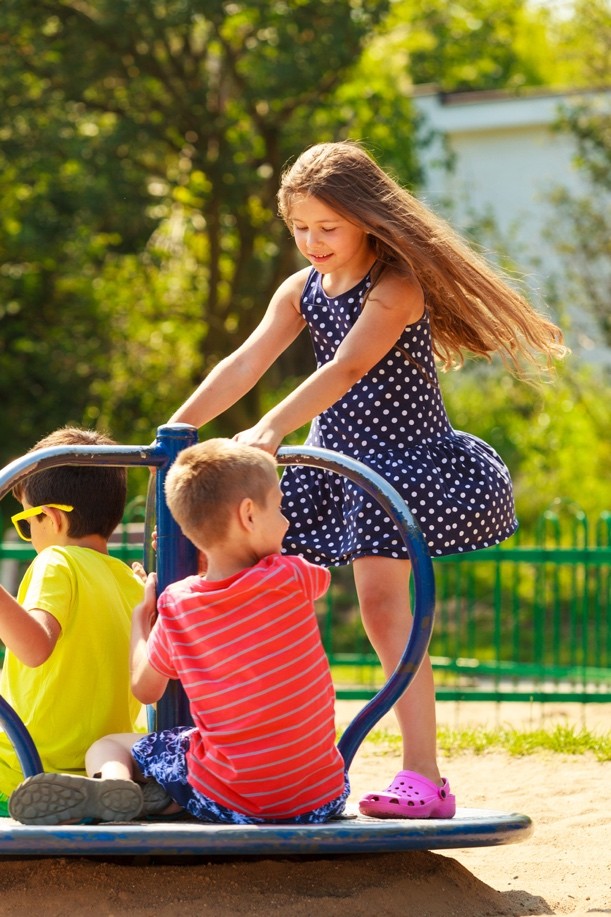
- Safer-feeling social space: During recess, students perceive the time as “theirs,” with more autonomy and choice, which increases their sense of control and reduces anxiety. The open environment and looser structure allow children to approach social interaction in graduated ways—joining a game, observing from the edges, or playing alone.
- Practice with conflict and cooperation: Outdoor play invites self-directed problem-solving, negotiation of rules, and conflict resolution in relatively low-stakes settings. These experiences build social competence and resilience, both of which buffer anxiety.
- Reduced bullying and behavioral incidents: Intentional outdoor exposure—whether through recess, outdoor classrooms, or structured activities—has been associated with fewer bullying and violent incidents, as well as warmer peer relationships. A more positive climate translates into less anticipatory anxiety about school for many students.
Taken together, these outcomes shift the emotional “baseline” of the school day. Students come back indoors calmer and more regulated, which benefits not only individual mental health but the collective classroom environment.
Supporting Academic Learning
For administrators, one of the most powerful arguments for outdoor time is that it supports, rather than competes with, academic priorities.
- Improved on-task behavior: After outdoor play or outdoor lessons, students show better attention, less hyperactivity, and more readiness to learn. Teachers report that classes are calmer, transitions smoother, and instructional time more productive.
- Better mood, fewer disruptions: Access to green space and outdoor play is linked to lower anxiety, depression, and stress, which in turn correlate with fewer behavior incidents and office referrals. Reducing low-level disruption can recapture significant instructional minutes across a school year.
- Engagement and relevance: Outdoor learning spaces make it easier to deliver hands-on, real-world experiences, which boost curiosity and engagement across subjects. This can be particularly impactful for students who struggle in traditional classroom settings or experience school-related anxiety. Recess and outdoor learning are not “nice to have” extras; they are evidence-based supports for both mental health and academic performance.
5 Design principles for outdoor play and learning spaces
For school leaders and procurement managers, the goal is to translate this evidence into practical design and purchasing decisions. Several best practices emerge from research on outdoor environments for K–12 students.
Variety, choice, and “loose parts”
Spaces that combine fixed equipment with natural, variable elements support deeper play and better mood than paved areas alone.
- Include green features such as trees, shrubs, gardens, grass mounds, logs, and boulders to create a more natural, calming setting. Natural play areas are linked to reduced stress, anger, and depression and more positive moods in students.
- Provide “loose parts” like sand, water features, moveable blocks, crates, planks, and natural materials that students can manipulate and reconfigure. This supports imagination, autonomy, and problem-solving—key emotional-regulation skills.
Zones for different energy levels
Anxiety reduction is not one-size-fits-all; anxious students may need both high-movement outlets and quieter refuge.
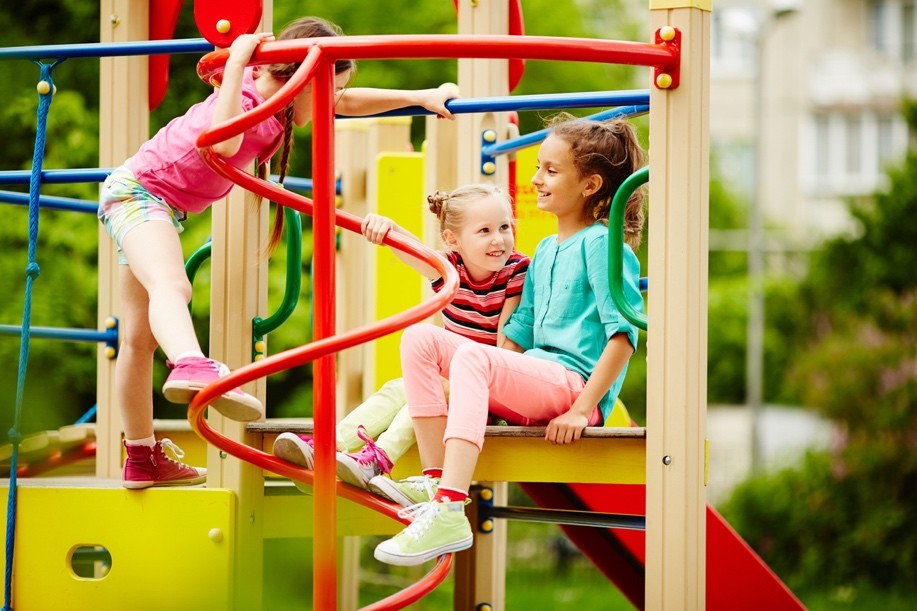
- Create clear zones for vigorous play (fields, running tracks, climbing structures) as well as quieter areas (benches under trees, reading nooks, small group tables). This allows students to choose what fits their state that day.
- Build in smaller, semi-enclosed spaces—such as garden alcoves, pergolas, or low-walled seating circles—where students who feel overwhelmed can retreat while still being supervised. These micro-refuges help prevent escalation of anxiety or conflict.
Outdoor classrooms as standard, not add-ons
Outdoor classrooms and flexible learning spaces extend the benefits of recess into instructional time.
- Design durable outdoor classrooms with weather-resistant seating, shade, and writing surfaces, located within easy reach of the main building so teachers can realistically use them. Schools that do this report being able to use outdoor classrooms for the vast majority of intended days.
- Ensure access to basic utilities—Wi‑Fi, power where feasible, storage for materials—so teachers can teach core subjects outdoors without sacrificing curricular goals.
Accessibility, safety, and maintainability
To be effective, outdoor spaces must feel physically and psychologically safe, and they must be usable for all students.
- Specify surfacing, paths, and equipment that meet accessibility standards so students with mobility, sensory, or developmental needs can participate fully in outdoor play and learning. Inclusive access reduces isolation-related anxiety.
- Invest in durable, low-maintenance materials and clear sightlines for supervision, which reduces staff anxiety about risk and makes it more likely that outdoor spaces are used every day rather than only in ideal conditions.
Procurement and policy levers
Procurement decisions and scheduling policies either enable or unintentionally limit the mental-health benefits of outdoor time.
- Protect daily outdoor time in master schedules, aiming for multiple shorter recesses rather than a single long block, especially in early grades. Even 15–20 minutes of outdoor time can meaningfully reduce stress when used consistently.
- Prioritize investments that add green space and flexible, multi-use elements (trees, shade structures, modular seating, loose-part kits) over single-purpose, high-cost equipment. These features typically deliver more mental-health and learning value per dollar.
- Include mental health and well-being criteria in facility and product evaluations—for example, scoring designs higher if they incorporate natural elements, varied play zones, and an outdoor classroom plan.
When school leaders and procurement teams treat outdoor recess and learning as core infrastructure for emotional health—not expendable extras—they create campuses where students are measurably less anxious, more focused, and better prepared to learn.
 Leslie Stebbins is the Director of Research4Ed. She has more than twenty-five years of experience in higher education and K-12 learning. Her clients include Harvard University, the U.S. Department of Education, Tufts University, and the Gates Foundation. She has an M.Ed. from the Technology Innovation & Education Program at the Harvard Graduate School of Education and a Master’s in Library and Information Science from Simmons College. https://www.linkedin.com/in/lesliestebbins/