

In the ongoing quest to boost student achievement and support holistic well-being, K–12 school administrators spend significant time evaluating curricula, professional development, and socio-emotional interventions. Yet, one of the most powerful leverage points for student success is sitting right beneath our feet—and hanging over our heads.

It is the physical environment.
Over the past decade, rapid advancements in cognitive science, neuroscience, and environmental psychology have revealed a profound truth: the human brain is deeply sensitive to the physical space in which it learns. Spatial variables like lighting, air quality, acoustic design, and visual complexity do not merely set a pleasant backdrop; they actively mediate how the brain processes, consolidates, and retains information.
For school leaders, bridging the gap between brain science and facility design offers an evidence-based roadmap for building schools where every student can thrive. Here is how recent cognitive research can inform practical, high-impact strategies for your district’s physical spaces.
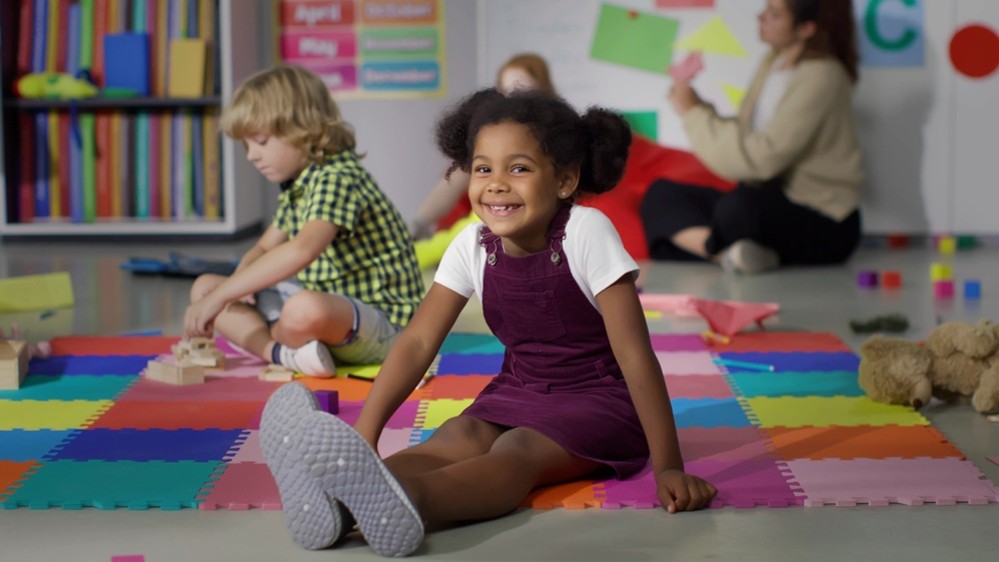
1. Optimize Lighting to Support Cognitive Function and Circadian Rhythms
The Science
The human brain evolved under natural sunlight, which regulates our circadian rhythms—the internal biological clocks that dictate alertness, mood, and sleep cycles. Research in cognitive neuroscience reveals that exposure to dynamic, natural light boosts executive function, processing speed, and working memory. Conversely, harsh, flickering fluorescent lighting triggers low-grade neurological stress and elevated cortisol levels, particularly in neurodivergent learners.
Practical Implementation Strategies:
- Maximize Daylighting Harvesting: During renovations or new builds, prioritize window placement and light shelves that push natural light deep into the building core.
- Transition to Tunable LED Systems: Retrofit existing classrooms with color-tunable LED lighting. Administrators can establish simple protocols for teachers: use high-intensity, cooler light (4000K–5000K) during morning instruction to heighten alertness, and shift to warmer, dimmer tones (2700K–3000K) to calm students after recess or during quiet reading.
- Eliminate Glare and Flicker: Install automated or manual shades to prevent direct solar glare on screens and work surfaces, which causes visual fatigue and headaches.
2. Engineer Acoustic Comfort to Protect Working Memory
Working memory—the brain’s mental workbench—has a strictly limited capacity. Cognitive Load Theory demonstrates that when a classroom is acoustically poor, a student’s brain must allocate substantial cognitive effort just to decode spoken language from background noise. This “auditory processing strain” leaves significantly fewer mental resources available for understanding and storing new concepts. Children, whose auditory systems are not fully matured until late adolescence, are especially vulnerable to background noise and excessive reverberation.
Practical Implementation Strategies:
- Lower Reverberation Times (RT): Aim for classroom reverberation times under 0.6 seconds (and under 0.4 seconds for inclusive classrooms catering to students with hearing or sensory processing differences). Install high-performance acoustic ceiling tiles (NRC 0.70+) and sound-absorbing wall panels.
- Isolate Mechanical Noise: Require facilities teams to inspect HVAC units to ensure background noise levels do not exceed 35–40 dBA. Simple fixes, such as adding sound attenuators to ductwork or upgrading to quieter heat pumps, pay immediate dividends in student comprehension.
- Zoned Acoustic Carpeting: Use acoustic carpet tiles or area rugs in high-traffic zones and collaborative group spaces to dampen foot traffic and chair movement noises.
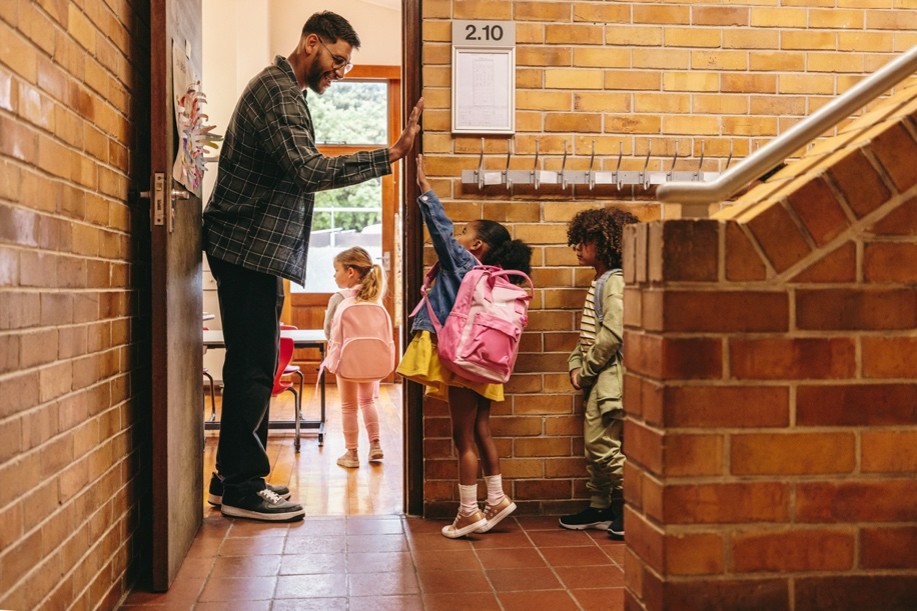
3. Manage Visual Complexity to Reduce Cognitive Overload
For decades, traditional primary and secondary classrooms have featured wall-to-wall posters, vibrant banners, and dense displays. However, a landmark study from Carnegie Mellon University confirmed that heavily decorated classrooms act as visual clutter that distracts young learners, leading to higher off-task behavior and lower test scores. The brain’s visual cortex is easily overwhelmed; when a space is overstimulated, executive control mechanisms must work overtime to filter out irrelevancies.
Practical Implementation Strategies:
- Adopt the “20–50% Rule”: Keep 20% to 50% of wall space completely clear. Limit displays to active learning aids, student work, and essential instructional materials.
- Calm the Color Palette: Replace neon or high-contrast color schemes with muted, natural tones (sage greens, soft blues, warm neutrals) on primary walls. Reserve bright accent colors for non-instructional areas like hallways or cafeterias.
- Conceal Visual Chaos: Utilize closed cabinetry or opaque bins for supply storage rather than open shelving, removing visual distractions from students’ direct line of sight.
4. Leverage Biophilic Design to Restore Mental Energy
Attention Restoration Theory (ART), grounded in evolutionary biology and neuroscience, posits that direct and indirect exposure to natural elements restores depleted attentional capacity. In high-stakes school environments, mental fatigue sets in rapidly. Integrating “biophilic” elements—natural materials, plants, and views of nature—calms the sympathetic nervous system (fight-or-flight) and reactivates the parasympathetic system, reducing anxiety and restoring focus.
Practical Implementation Strategies:
- Provide Unobstructed Views of Nature: Ensure window views of greenery, trees, or sky are not blocked by tall furniture or dark window coverings. Research shows that even a brief 40-second micro-break looking at a green landscape improves focus and task accuracy.
- Incorporate Natural Materials: Use wood grain finishes on furniture, natural fiber textiles, and organic patterns in flooring.
- Bring Living Elements Indoors: Introduce low-maintenance indoor plants or living green walls in common areas, libraries, and classrooms to improve indoor air quality and provide psychological calm.
5. Design Flexible, Movement-Friendly Spaces for Embodied Cognition
The Science
Cognitive science has thoroughly debunked the idea that learning is a purely mind-based activity. Under the framework of embodied cognition, research shows that physical movement, postural changes, and spatial navigation are intimately tied to brain health. Physical movement increases blood flow to the brain, stimulates the release of Brain-Derived Neurotrophic Factor (BDNF), and enhances neuroplasticity. Rigid seating that forces prolonged stillness can impair executive function and increase restless behaviors.
Practical Implementation Strategies:
- Deploy Mobile, Ergonomic Furniture: Furnish classrooms with lightweight, caster-based desks and flexible seating options (wobble stools, standing desks, floor cushions). This allows quick transitions between direct instruction, small group work, and independent study without disrupting flow.
- Create Active Learning Zones: Designate clear movement pathways and active stations within the classroom where students can stand, stretch, or work on vertical dry-erase surfaces.
- Provide Sensory Decompression Nooks: In every wing or floor, create small “re-centering” spaces equipped with low lighting and comfortable seating where students experiencing sensory overload can self-regulate before returning to instruction.
The Administrative Imperative: Environment as an Educational Tool
Designing brain-friendly learning environments does not necessarily require a multi-million-dollar referendum. Many of these strategies—decluttering walls, establishing quiet zones, adjusting lighting schedules, and rearranging furniture—can be implemented immediately through low-cost, high-impact operational shifts.
By viewing school facilities through the lens of cognitive science, K–12 administrators can align their physical infrastructure with how the human brain naturally learns. In doing so, you transform your buildings from passive shelters into active, evidence-based instruments that promote health, equity, and academic success for every student who walks through your doors.
Leslie Stebbins is the director of Research4Ed. She has more than twenty-five years of experience in higher education and K-12 learning and instructional design. Her clients include Harvard University, the U.S. Department of Education, Tufts University, and the Gates Foundation. She has an M.Ed. from the Technology Innovation & Education Program at the Harvard Graduate School of Education and a Master’s in Library and Information Science from Simmons College.