

For decades, school design followed a single formula: rows of forward-facing desks built for broadcast-style instruction, flanked by static computer labs. Artificial intelligence disrupts this physical layout. As adaptive platforms dynamically tailor content to individual learning speeds and diagnostic needs, instruction stops being a uniform, whole-class event. Technology transitions from a passive device on a desk to an active driver of spatial movement.
For district administrators and campus planners, this evolution demands a core shift: physical learning spaces must be redesigned to accommodate human collaboration alongside intelligent systems. Below is an operational outline of how AI will redefine educational spaces from elementary school through higher education.

1. Elementary Education: Multi-Sensory Discovery Hubs
In primary grades, interior architecture must prioritize physical safety, foundational socialization, and tactile learning. AI integration at this level operates largely in the background, serving as an invisible engine for real-time diagnostic observation and sensory feedback.
- Decentralized Focal Points: The traditional single focal point at the front of the room gives way to multi-zone Discovery Hubs. One zone might feature tactile physical manipulatives embedded with spatial sensors, while another provides reading corners equipped with soft, ambient voice-coaching capabilities.
- Acoustic Management for Conversational Tech: Younger learners interact with adaptive software primarily through voice rather than text keyboards. This requires micro-acoustic dampening—such as sound-absorbing wall panels, acoustic ceiling baffles, and semi-enclosed seating—to allow several pupils to converse with audio tutors concurrently without raising classroom noise.
- Sensor-Driven Activity Zones: Environmental and movement sensors help educators track group focus and physical restlessness in real time. Physical layouts accommodate these insights by incorporating designated movement stations and automated lighting that transitions between high-focus activities and active physical breaks.
2. Middle School: Modular Transition Spaces
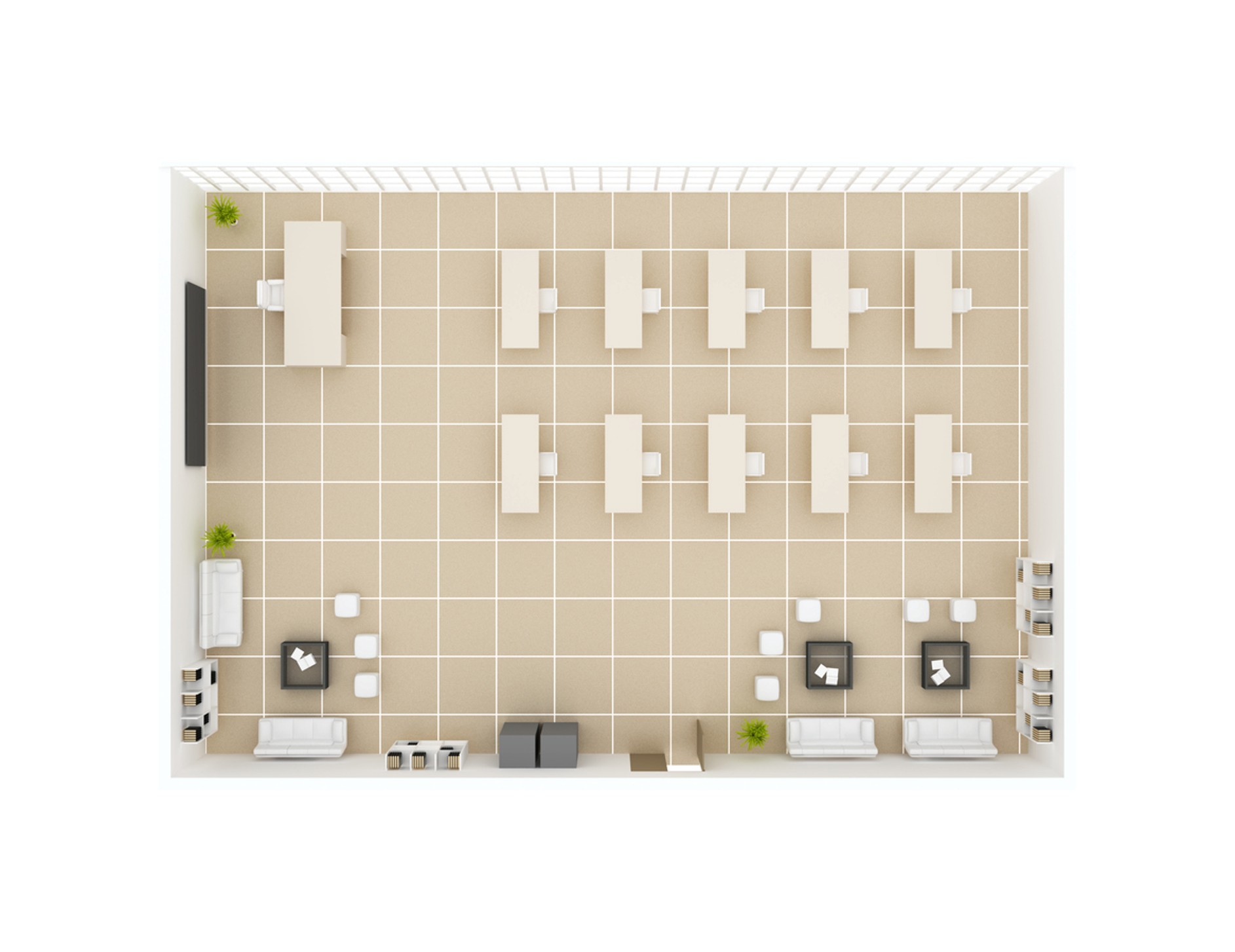
Middle school is characterized by rapid shifts in cognitive development. Because intelligent platforms allow students in the same room to work on vastly different academic material, the physical floor plan must adjust rapidly between whole-group orientation, team projects, and independent study.
- Reconfigurable Furniture Units: Static desks are replaced by lightweight, mobile tables on wheels with integrated battery banks. Classrooms can reconfigure in under two minutes from a centralized debate layout into independent group clusters or isolated study bays. Wheel locks are essential!
- Data-Informed Spatial Optimization: Facility managers deploy occupancy sensors to gather aggregate data on how spaces are used. School leaders can evaluate which room configurations generate the highest task engagement during technology-assisted group work, using empirical data to refine future renovation plans.
- Adjacent Intervention Pods: As automated software handles routine skills practice, educators spend more time delivering targeted, small-group interventions. Classrooms feature adjacent glass-walled breakout pods where teachers can pull small groups for intensive coaching without losing sight of the broader room.
3. High School: Professional Incubator Models
High schools adopting personalized digital instruction move away from industrial-era layouts and adopt designs inspired by modern research facilities and corporate incubators.
- Media Centers as Fabrication and Prototyping Labs: Traditional quiet libraries are transformed into active media hubs. High schoolers utilize generative software to draft 3D models, run physics simulations, or develop code, moving immediately from digital ideation to physical rapid-prototyping equipment like 3D printers and CNC machines.
- Zoned Noise and Focus Architecture: Schedules move away from rigid 45-minute bell cycles. Facilities incorporate distinct spatial zones: sound-isolated focus booths designed for quiet work alongside digital assistants, and open lounge environments meant for peer-to-peer synthesis.
- Presentation and Process-Verification Arenas: To emphasize original thinking and academic integrity, classrooms prioritize visible learning stages. Facilities integrate dedicated presentation walls, interactive screens, and mini-auditoriums where students present their reasoning, explain their digital workflows, and defend their conclusions orally.
4. Higher Education: Advanced Simulation and Applied Studios
At the university level, traditional high-capacity lecture halls face declining utility as foundational content delivery shifts to dynamic, on-demand digital platforms. Campus capital investments pivot toward specialized, hands-on environments that cannot be replicated remotely.
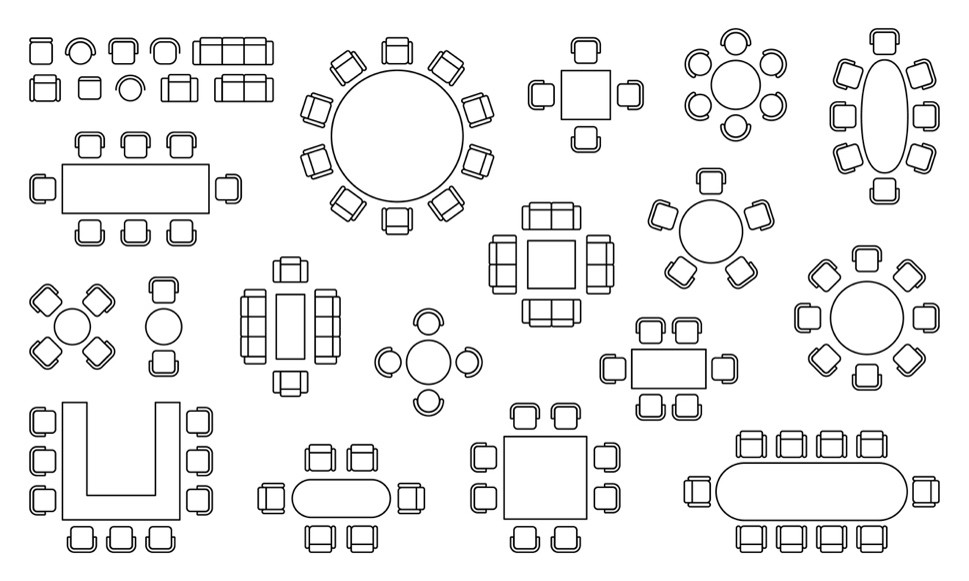
- Active-Learning Studio Conversions: Universities decommission standard tiered auditoriums in favor of flat-floor active learning studios. These feature round-table team stations, surround-sound audio, and multi-surface displays where students analyze complex data sets and evaluate computer-generated models alongside faculty.
- Immersive Simulation Environments: Higher education facilities invest heavily in physical-digital hybrid spaces—such as virtual reality bays, spatial audio labs, and digital twin monitoring centers. Here, students run real-time, complex system tests (e.g., medical emergency management, structural engineering stress tests, or urban planning models).
- High-Density Infrastructure Planning: To support demanding computational workloads, institutional master plans must account for increased electrical loads, robust high-density Wi-Fi networks, and accessible floor troughs to simplify future infrastructure upgrades.
- Updating physical infrastructure for an AI-integrated era is not simply about adding hardware to existing rooms. It requires creating adaptable, human-centered spaces optimized for what physical facilities do best: fostering community, hands-on creation, and high-level interpersonal collaboration.
This article was adapted from the following sources:
- Discovery Education. “The Pros and Cons of AI in Education: Benefits, Risks, and Real Examples.”
- American College of Education. “AI in the Modern Classroom: Benefits and Best Practices.”
- edmSTUDIO. “Leveraging AI to Design the Future of Learning Spaces.”
- Frontiers in Built Environment. “Enhancing the use of artificial intelligence in architectural education.”
- MDPI Buildings. “Enhancing Architectural Education through Artificial Intelligence: A Case Study.”
Leslie Stebbins is the director of Research4Ed. She has more than twenty-five years of experience in higher education and K-12 learning and instructional design. Her clients include Harvard University, the U.S. Department of Education, Tufts University, and the Gates Foundation. She has an M.Ed. from the Technology Innovation & Education Program at the Harvard Graduate School of Education and a Master’s in Library and Information Science from Simmons College.