
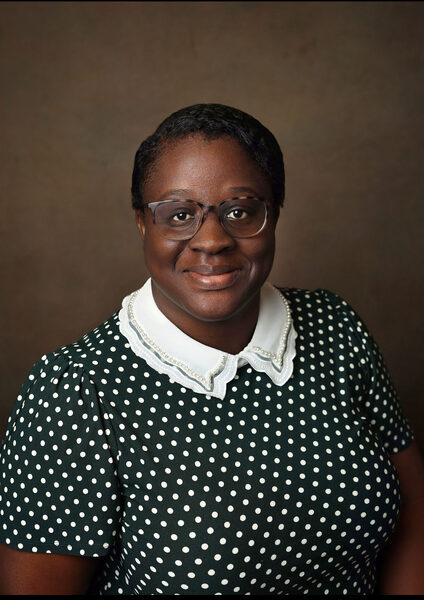
Afua Adutwumwaa Ameley-Quaye
ScientistThe Children’s Equity Project, Arizona State UniversityDr. Afua Adutwumwaa Ameley-Quaye is a Ghanaian-trained architect, a learning scientist, and an interdisciplinary researcher examining how physical learning environments shape teaching and learning. Her work focuses on how the intrinsic qualities of space can be intentionally leveraged to support engagement, participation, and meaningful learning in early childhood education. She currently serves as a Scientist with the Children’s Equity Project at Arizona State University, where she contributes to national efforts to strengthen early learning systems across the PK–3 continuum. Drawing on architectural practice in Ghana and research in the United States, she brings a global, practice-informed perspective to the design and use of learning environments.
WORKSHOP: Transforming Elementary Classroom Spaces into Early Childhood Places
Today, over 1.75 million 3- and 4-year-old children are enrolled in state-funded pre-kindergarten programs. Most of these programs are in elementary
…Today, over 1.75 million 3- and 4-year-old children are enrolled in state-funded pre-kindergarten programs. Most of these programs are in elementary school buildings using classrooms built for older children of different physical sizes and developme
…Today, over 1.75 million 3- and 4-year-old children are enrolled in state-funded pre-kindergarten programs. Most of these programs are in elementary school buildings using classrooms built for older children of different physical sizes and developmental needs. Some children — barely potty trained and only 36 months old — are entering a world designed for significantly older students. Join us to discuss and design early childhood PLACES that meet
…Today, over 1.75 million 3- and 4-year-old children are enrolled in state-funded pre-kindergarten programs. Most of these programs are in elementary school buildings using classrooms built for older children of different physical sizes and developmental needs. Some children — barely potty trained and only 36 months old — are entering a world designed for significantly older students. Join us to discuss and design early childhood PLACES that meet the needs of our youngest learners.
Show MoreClick the title to see all detailsShow More