
Back to Speakers
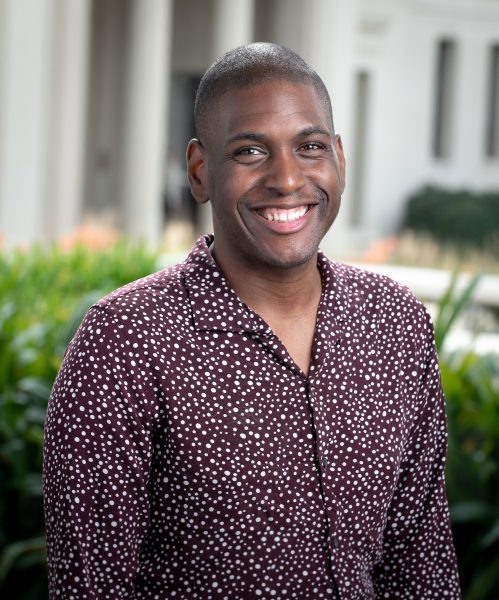
Isaiah Thomas

Isaiah Thomas

Associate Dean of Students & Director of Residential Education, Housing Services, and Student ConductOccidental College

Dr. Isaiah Thomas brings over fifteen years of experience in higher education and a deep commitment to fostering inclusive environments where students from all backgrounds can thrive. A first-generation college graduate and person of color, Isaiah is passionate about building communities where every student belongs. He currently leads Residential Education and Housing Services at Occidental College and oversees the Office of Student Conduct and Veteran Student Support. Prior to Occidental, he served as Director of Residential Communities and Deputy Title IX Coordinator for Students at Swarthmore College, with additional roles at Carleton College, Penn State University, and Semester at Sea. He also serves as affiliate faculty in the counseling education program at California Lutheran University and is certified in Mental Health First Aid. Isaiah holds an Ed.D. in Higher Education Administration from Northeastern University, an M.A. in Counseling and Personnel Services from the University of Maryland, and a B.A. in Mathematical Economics from Colorado College.

Thu Oct 298:00 AM – 9:00 AM

Building a Sense of Belonging on a College Campus

Belonging isn't just a feeling, it's a design challenge. As college campuses face mounting pressure to improve student retention, support staff wellbe…Belonging isn't just a feeling, it's a design challenge. As college campuses face mounting pressure to improve student retention, support staff wellbeing, and serve an increasingly diverse population, the physical environment has emerged as one of th…Belonging isn't just a feeling, it's a design challenge. As college campuses face mounting pressure to improve student retention, support staff wellbeing, and serve an increasingly diverse population, the physical environment has emerged as one of the most powerful and underutilized tools available. This presentation brings together a higher education practitioner and a furniture industry expert, both with deep roots in student affairs and a shar…Belonging isn't just a feeling, it's a design challenge. As college campuses face mounting pressure to improve student retention, support staff wellbeing, and serve an increasingly diverse population, the physical environment has emerged as one of the most powerful and underutilized tools available. This presentation brings together a higher education practitioner and a furniture industry expert, both with deep roots in student affairs and a shared history working at Swarthmore College, in Pennsylvania, to explore how the spaces we plan, specify, and build actively shape or undermine a student's sense of belonging on campus. Grounded in student development theory and translated into practical design language, attendees will examine how furniture, fixtures, equipment, and spatial configuration can transform a campus from a place students attend to a place they belong. With real-world examples drawn from multiple campus environments, this session gives designers, planners, and facilities professionals the framework and vocabulary to make the case for spaces that truly work for every student.Show MoreClick the title to see all detailsShow More


EDsession (60 minutes in classrooms)Session TypeTRACK 2: Designing for the Human Experience — Wellbeing, inclusion, safety, and human performanceSession Track
Katie Clark
Katie ClarkHigher Education Market Manager, KI
Isaiah Thomas
Isaiah ThomasAssociate Dean of Students & Director of Residential Education, Housing Services, and Student Conduct, Occidental College
Tags:Group E
Allow Registration:No
Capacity Unlimited:No
Indicate how the topic is applicable to Health, Safety, Welfare (HSW) Design credits.:This session qualifies for Health, Safety, and Welfare credit under the human health and wellness category. The presentation directly addresses the intersection of the built environment and mental health outcomes in higher education, a recognized public health concern. It draws on data from the American Psychological Association, the American Academy of Pediatrics, and the Mayo Clinic documenting a national crisis in student mental health, and connects those outcomes to specific evidence-informed spatial strategies. Learning objectives address how physical spaces can mitigate the psychological risks of non-belonging — including impostor syndrome, stereotype threat, and social isolation — and how designers can apply trauma-informed design principles, sensory-aware environments, and universal inclusion strategies to reduce harm and support the health and performance of all campus community members. At least three of the four learning objectives address HSW principles, including inclusive design beyond ADA compliance, wellness-supportive space typologies, and the connection between belonging and measurable health outcomes.
Learner Engagement:1. Small-group discussion early in the session where attendees share a campus space that made them feel or not feel like they belonged, drawing on their own experience before introducing theory. 2. A live "space audit" activity midway through, where attendees use a simple belonging framework from the presentation to evaluate a campus space image projected on screen, generating peer-to-peer dialogue about design decisions.
Learning Objective 1:Translate key belonging theories and student development frameworks (Maslow, Tinto, impostor syndrome, and stereotype threat) into design criteria that campus planners, architects, and interior designers can apply across project types.