

In this changing environment, flooring has become far more important than many people realize.
The right flooring choice affects everything from acoustics and maintenance costs to indoor air quality, safety, durability, and the overall feel of a school. Increasingly, school districts are turning to resilient flooring solutions—including luxury vinyl tile (LVT) and rubber flooring—to help meet these demands while creating learning environments that are healthier, quieter, and easier to maintain.

Resilient flooring is a durable, non-textile, and firm yet flexible surface designed to “give” or bounce back from heavy foot traffic, compression, and impacts. Engineered for high-traffic educational environments, it provides slip resistance, noise reduction, and comfort underfoot for students and staff.
One of the biggest challenges to selecting floor materials is being able to experience the different types and evaluate firsthand what each one has to offer. Attending a conference such as EDspaces provides school leaders and facility managers with a chance to compare many different options at the same time in the same showroom.
Flooring as a Foundation for Flexible Learning
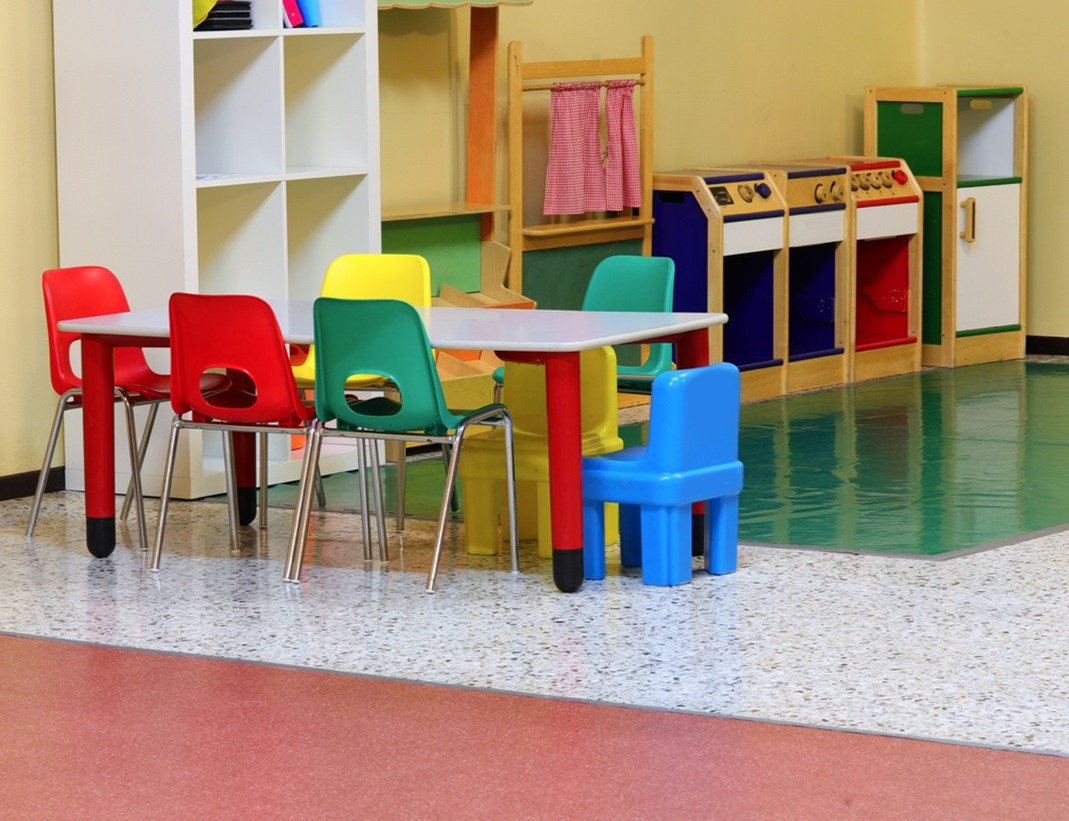
Modern classrooms are constantly in motion. Students move between independent work, collaborative activities, floor seating, STEM projects, and small-group instruction throughout the day. Furniture is rearranged frequently, and many spaces now serve multiple purposes.
This shift toward flexibility places significant stress on school interiors. Flooring must be durable enough to handle rolling chairs, mobile desks, heavy foot traffic, and constant reconfiguration without showing premature wear.
Resilient flooring is especially well suited for these conditions because it combines durability with adaptability. Many resilient products are available in modular formats, allowing damaged sections to be replaced individually rather than requiring an entire room to be resurfaced. For facility managers overseeing large campuses, that can significantly reduce downtime and long-term repair costs.
In addition, today’s resilient flooring products offer far more design flexibility than older generations of school flooring. Schools can use varied colors, textures, and patterns to define learning zones, create wayfinding cues, or make spaces feel more welcoming and less institutional.
Supporting Student Wellness and Comfort
School leaders are placing increasing emphasis on student wellness, and the physical environment plays an important role in supporting that goal. Research continues to show that students perform better in environments that feel calm, comfortable, and safe. Flooring contributes to this experience in subtle but meaningful ways. Softer surfaces underfoot can create a warmer and more inviting atmosphere than hard, industrial materials. Many resilient flooring products also incorporate natural colors and textures that support biophilic design approaches inspired by nature.
These choices can help reduce visual overstimulation and create classrooms that feel less stressful—particularly important for younger learners and neurodiverse students who may be more sensitive to sensory input.
Rubber flooring, in particular, has gained popularity in educational settings because of its comfort underfoot and slip-resistant properties. In elementary schools, where students often sit, kneel, or play on the floor, comfort and safety are especially important considerations.
Improving Acoustics in Busy Schools
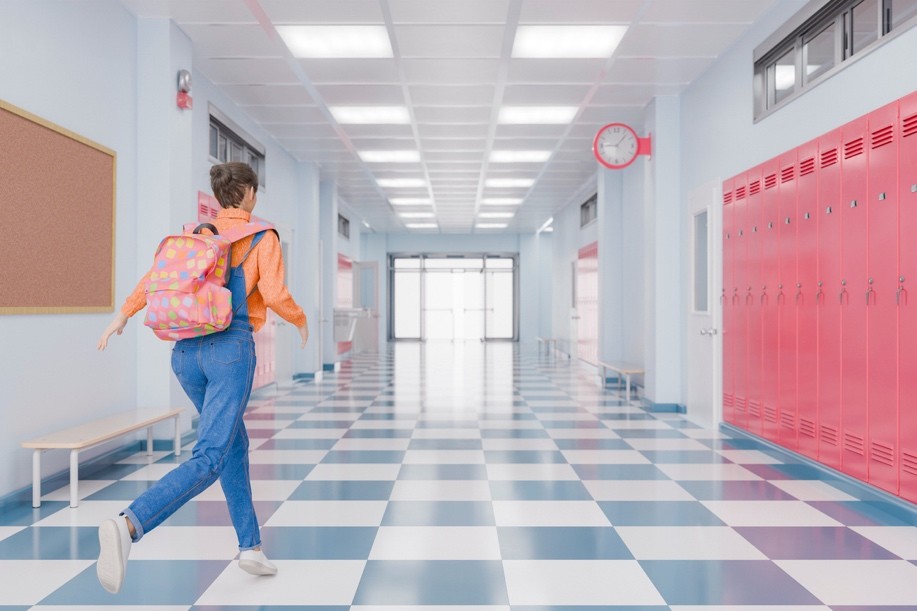
Noise is one of the most common challenges in modern school environments. Open classroom concepts, collaborative learning, hard surfaces, and large student populations can create constant background noise that interferes with concentration and instruction. Younger students are especially vulnerable to distraction from poor acoustics, but excessive noise can affect learners of all ages.
Flooring can make a significant difference. Many resilient flooring products are designed to absorb impact sound and reduce noise from footsteps, moving chairs, rolling carts, and hallway traffic. Quieter classrooms help teachers communicate more effectively and make it easier for students to focus.
Acoustic performance is particularly important in media centers, special education spaces, early learning classrooms, counseling offices, and multipurpose learning environments. For school districts investing in new construction or renovation projects, acoustics should be considered early in the design process rather than treated as an afterthought.
Helping Schools Maintain Healthier Indoor Environments
Indoor air quality remains a major concern in K–12 schools, especially as districts continue prioritizing student health and attendance. Modern resilient flooring products can contribute to healthier indoor environments in several ways. Many products are now manufactured with low volatile organic compound (VOC) emissions, helping reduce airborne contaminants inside classrooms.
Non-porous surfaces also resist moisture, dirt, and allergens more effectively than some traditional materials, making cleaning easier and more efficient. This is especially valuable in schools where custodial teams must maintain large square footages with limited staffing.
Another important consideration is maintenance chemistry. Some resilient flooring products no longer require waxing, stripping, or harsh chemical treatments to maintain their appearance. That can help reduce exposure to strong cleaning agents while lowering labor and maintenance costs over time. For districts trying to balance operational efficiency with wellness goals, these features can provide long-term value beyond initial installation costs.
Reducing Long-Term Maintenance Burdens
School flooring takes a tremendous beating every day. From muddy boots and cafeteria spills to science projects, sporting events, and thousands of students moving through hallways, few environments experience the same level of continuous wear as K–12 schools.
As a result, durability and ease of maintenance are critical considerations for facility managers.
Resilient flooring is often selected because it performs well under heavy use while requiring less intensive upkeep than many traditional flooring materials. Rubber flooring and modern LVT products are highly resistant to scratches, stains, dents, and moisture damage.
For maintenance teams already stretched thin, flooring that requires fewer repairs and less specialized care can make a meaningful operational difference. Long-lasting materials also reduce disruptions caused by replacement projects during the school year.
When evaluating flooring options, many districts are shifting their focus from upfront material cost alone to total cost of ownership over the product’s lifespan. In many cases, resilient flooring delivers stronger long-term value because of its durability and lower maintenance requirements.
Supporting Sustainability Goals
Sustainability has become an increasingly important priority for school districts nationwide. Many schools are now evaluating materials based not only on performance and cost, but also on environmental impact. Durable flooring products contribute to sustainability by lasting longer and reducing replacement frequency. Some resilient flooring manufacturers also offer products with recycled content, transparent environmental reporting, and lower embodied carbon footprints.
Tools such as Environmental Product Declarations (EPDs) and Health Product Declarations (HPDs) are helping districts make more informed decisions about material health and environmental performance. As schools pursue greener buildings and long-term operational efficiency, resilient flooring can support both sustainability initiatives and budget goals simultaneously.
A Practical Choice for the Future of Education
Flooring may not always be the most visible part of a school design project, but it has an outsized impact on how educational spaces function every day. The demands placed on today’s schools require materials that can support flexibility, wellness, durability, acoustics, and sustainability all at once. Resilient flooring has emerged as a practical solution because it helps schools create environments that are adaptable, comfortable, and built to withstand years of heavy use.
For K–12 facility leaders planning renovations or new construction projects, flooring decisions are no longer simply about appearance. They are long-term operational choices that affect maintenance budgets, student experience, and the overall performance of the learning environment for years to come.
 Leslie Stebbins is the director of Research4Ed. She has more than twenty-five years of experience in higher education and K-12 learning and instructional design. Her clients include Harvard University, the U.S. Department of Education, Tufts University, and the Gates Foundation. She has an M.Ed. from the Technology Innovation & Education Program at the Harvard Graduate School of Education and a Master’s in Library and Information Science from Simmons College.