

In the modern K-12 landscape, “Educational Adequacy” is no longer defined solely by the presence of a whiteboard and four walls. As our understanding of neurodiversity grows, school leaders and facility managers are recognizing that the physical environment itself acts as a “third teacher.” For students with autism, ADHD, sensory processing disorders, or anxiety, a standard classroom can be a minefield of sensory triggers—flickering lights, humming HVAC units, and high-traffic corridors—that physically impede the ability to learn.
For administrators and facilities staff, the challenge is clear: How do we move beyond ADA compliance to create truly inclusive spaces? Integrating sensory-friendly design is not just an act of empathy; it is a strategic investment in reducing behavioral incidents, improving student focus, and fostering an environment where every learner can thrive.
1. The Acoustic Environment: Silent Support

Acoustics are perhaps the most critical variable for neurodiverse students, many of whom experience “sensory flooding,” where they cannot filter out background noise from the teacher’s voice.
-
HVAC Systems: For facility managers, this means prioritizing low-decibel HVAC units. Systems that “clunk” on or hum at high frequencies can be physically painful for students with auditory hypersensitivity.
-
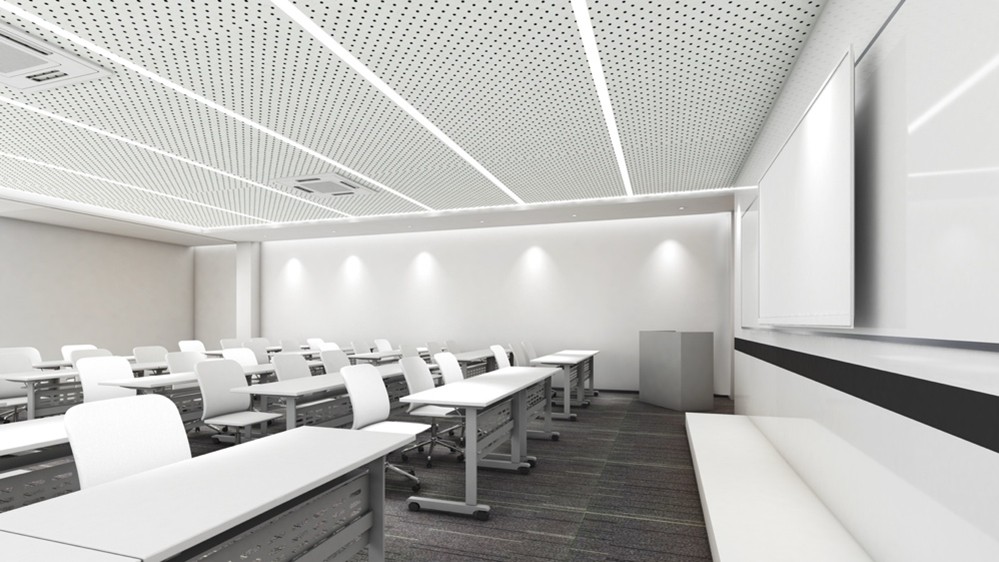
Surface Materials: Modern school design often favors “hard” surfaces (polished concrete, glass) for durability. However, these surfaces create echoes. Strategic use of acoustic ceiling baffles, wall panels, and high-quality carpeting in designated areas can dampen the “noise floor” of a classroom.
-
Sound Zoning: Designers are now implementing sound-masking technology or creating “soft zones” where the acoustic environment is strictly controlled, allowing students to decompress after high-sensory activities like gym or lunch.
2. Lighting: Beyond the Fluorescent Hum
Many older school buildings rely on fluorescent lighting, which often has a subtle flicker and a high-pitched hum invisible to most but debilitating for neurodiverse learners.
-
LED Transition: Upgrading to dimmable LED lighting is one of the most practical and cost-effective improvements facilities staff can make. LEDs eliminate flicker and allow teachers to adjust the “color temperature”—using warmer, softer light to calm a class and cooler, brighter light for focused tasks.
-
Natural Light Management: While daylighting is generally positive, direct glare can be a trigger. Facilities should invest in adjustable solar shades or light-diffusing window films to ensure that natural light is soft and consistent rather than harsh and distracting.
3. Spatial Organization and “Escape Hatches”
A sensory-friendly classroom requires a move away from the “open plan” concept, which can be overwhelming due to a lack of defined boundaries.
-
Defined Zones: Use furniture and flooring changes to clearly demarcate different areas (e.g., a “wet” area for art, a “soft” area for reading). This helps students with executive functioning challenges predict what behavior is expected in each space.
-
Respite Spaces (Calm-Down Corners): Every wing of a school—and ideally every classroom—should have a “low-stimulus” zone. This isn’t a place for punishment, but a “sensory reset” area. These spaces should feature neutral colors, weighted blankets, and minimal visual clutter.
-
Corridor Design: High-traffic hallways are often the site of sensory meltdowns. Widening corridors or adding “alcoves” where a student can step out of the flow of traffic can significantly reduce anxiety during transitions.
4. Visual Ergonomics: The War on Clutter
In many classrooms, every square inch of wall space is covered with posters, student work, and bright colors. For a neurodiverse learner, this is “visual noise” that makes it impossible to focus on the teacher.
-
Color Palettes: Facility staff and administrators should move toward “biophilic” color palettes—earth tones, muted greens, and soft blues. Avoid high-contrast patterns on floors or walls, which can cause “visual vibrations” for some students.
-
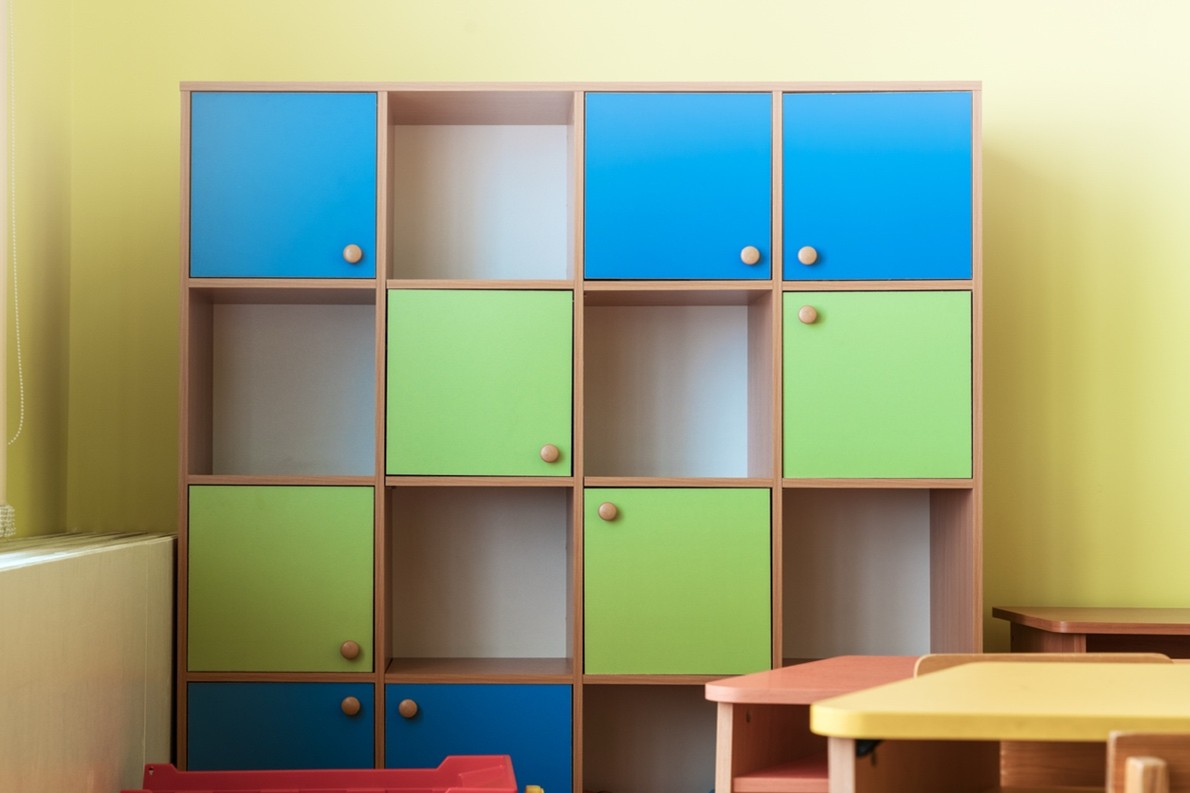
Storage Solutions: Practical facility management involves providing ample closed Being able to tuck away bins of toys or supplies behind cabinet doors reduces the cognitive load on students who struggle to filter out peripheral distractions.
5. Sensory-Friendly Wayfinding
Navigating a large school building is a complex task. For students who struggle with spatial awareness, traditional signage can be confusing.
-
Intuitive Mapping: Use consistent color coding for different wings of the building (e.g., the “Green Hall” for 3rd grade).
-
Visual Schedules: Facilities can install digital or physical boards that use icons alongside text. This “Universal Design” approach benefits neurodiverse students, English Language Learners, and younger children simultaneously.
6. The “Hidden” Sensory Factors: Smell and Touch
-
Air Quality: Sensory sensitivity often extends to smell. Using low-VOC (Volatile Organic Compound) paints and fragrance-free cleaning products is a simple but vital policy for facilities staff.
-
Tactile Variety: When selecting furniture, consider “fidget-friendly” options. Stools that allow for slight rocking or chairs with different textures can help students regulate their sensory input without disrupting the class.
A Shift in Perspective: Designing for Neurodiverse Students Benefits All Students
Designing for neurodiversity is not about creating a “special” room for a few students; it is about creating a flexible, high-quality environment that benefits everyone. A classroom that is quieter, better lit, and more organized helps every student focus better and feel more secure.
For school leaders, the path forward is one of incremental progress. Whether it is a full-scale renovation or a series of small facility upgrades—like switching to LEDs or adding acoustic panels—every change sends a powerful message: This school is a place where every brain is welcome.
Implementation Checklist for Facility Managers:
- Audit the “Noise Floor”: Identify and repair rattling vents or buzzing ballasts.
- Color Scan: Move toward neutral, matte finishes during the next painting cycle.
- Light Check: Prioritize dimmable switches and flicker-free LED bulbs.
- Storage Audit: Ensure classrooms have enough closed shelving to reduce visual clutter.
Additional information can be found in the following sources:
-
ASHA (American Speech-Language-Hearing Association): Guidelines on classroom acoustics and their impact on learning.
-
The Autistic Self Advocacy Network (ASAN): Insights into the lived experience of neurodiverse individuals in public spaces.

Leslie Stebbins is the director of Research4Ed. She has more than twenty-five years of experience in higher education and K-12 learning and instructional design. Her clients include Harvard University, the U.S. Department of Education, Tufts University, and the Gates Foundation. She has an M.Ed. from the Technology Innovation & Education Program at the Harvard Graduate School of Education and a Master’s in Library and Information Science from Simmons College.