Creating a classroom environment that nurtures executive function skills requires intentionality at every grade level. Distractions and disorganization often lurk in places we don’t expect—embedded in our lesson designs, our physical spaces, and our daily routines. The good news? Thoughtful adjustments, both small and large, can dramatically improve outcomes for all students.
Executive function skills help children and adults manage their attention, behavior, and emotions. These skills need to be learned, supported, and practiced. All children initially struggle with self-regulation and executive function skills, but some students need extra support to effectively develop these skills. The design of the learning environment, the classroom, is one of the primary ways school leaders and teachers can help students develop these skills.
What are executive function skills?
Executive function skills are critical in almost everything we do. These abilities—following instructions, maintaining focus amid distractions, and planning flexibly for projects—form the foundation of academic achievement and workplace success.
The numbers tell a compelling story: In a study tracking over 11,000 students, researchers found that kindergarteners with executive function challenges were ten times more likely to struggle academically throughout elementary school. Even more striking, these skills matter more than raw intelligence. Research shows that executive functions account for more than twice the variation in college grades compared to IQ scores.
The following design strategies can be used to support executive function and related skills: creating clutter free learning spaces; focusing on clarity; explicitly teaching organizational skills; scaffolding for learning differences; and managing cognitive load.

Design a Clutter-Free Learning Space
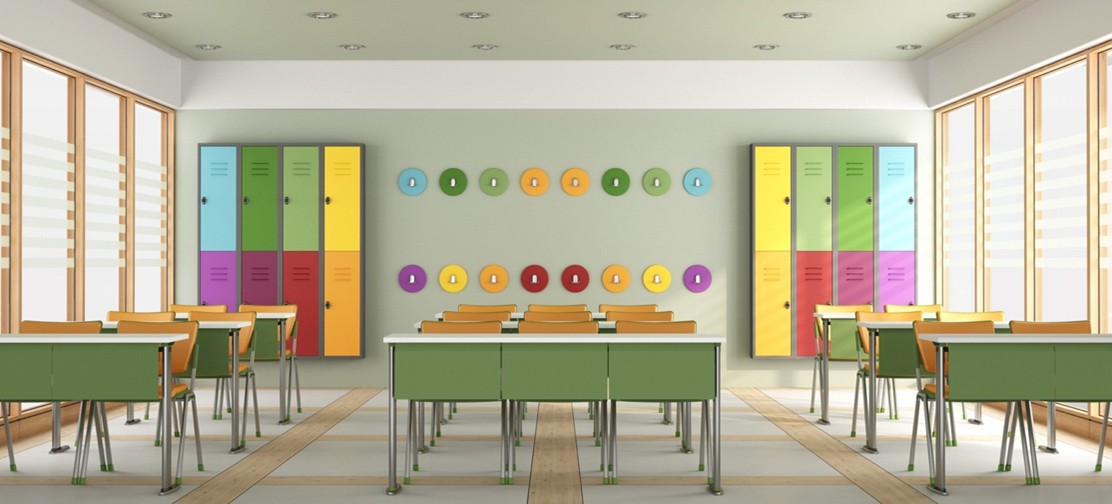
Your classroom’s physical design does more than showcase student work—it actively supports or undermines executive function development. Students need environments free from excessive distractions and overstimulation, and sometimes the culprit is staring us right in the face: our classroom walls. Research suggests that walls should create a lively atmosphere without tipping into chaos. A useful rule of thumb? Keep 20 to 50 percent of available wall space clear.
This doesn’t mean bare walls—display student work and academically relevant visual aids like anchor charts and maps. The trick is developing a system where older materials come down as new ones go up, preventing the slow creep of visual clutter. Also pay attention to environmental factors that impair cognitive performance: uneven or glaring light, excessive noise, uncomfortable temperatures, or poor ventilation can all sabotage students’ ability to focus.
Then there’s the elephant in the room—or rather, in students’ pockets. Research from 14 countries confirms that mere proximity to a mobile phone distracts students and negatively impacts learning. Separating students from their phones during class time has become widely recognized as best practice. The most effective phone policies are school-wide and consistently enforced, providing teachers with the institutional backing they need to implement this crucial boundary.
Focus on Clarity
Think about the last time you tried to follow confusing directions or parse through a dense, poorly organized document. That frustration you felt represents cognitive load—the mental effort required to process information. When we overload students’ working memory with unnecessarily complex materials, we’re essentially asking them to learn with one hand tied behind their backs.
Research indicates that the most effective lectures share three qualities: clear organization, lucid presentation, and minimal unnecessary mental demands. Breaking longer lectures into digestible chunks helps, as does building in periodic pauses where students can catch up, ask questions, and consolidate what they’re learning.
But lectures are just the beginning. The handouts we distribute, the slides we present, and even the way we structure written instructions can either support or sabotage student learning. Consider using headings and annotations to guide students toward high-priority content. Visual cues like underlines, highlights, and strategic arrows aren’t just decorative—research shows they can boost retention by up to 36 percent. Even something as simple as breaking up dense text with meaningful subheadings can double reading comprehension by giving students a roadmap of what’s ahead and prompting deeper thinking during reading.
Here’s a humbling truth: What feels crystal clear to you might be utterly confusing to your students. Student feedback offers the antidote. Try creating brief surveys with questions like “What confused you?” or “What was the hardest part of today’s lesson?” The insights you gain can transform your teaching in ways you never anticipated.
Explicitly Teach Organizational Tactics
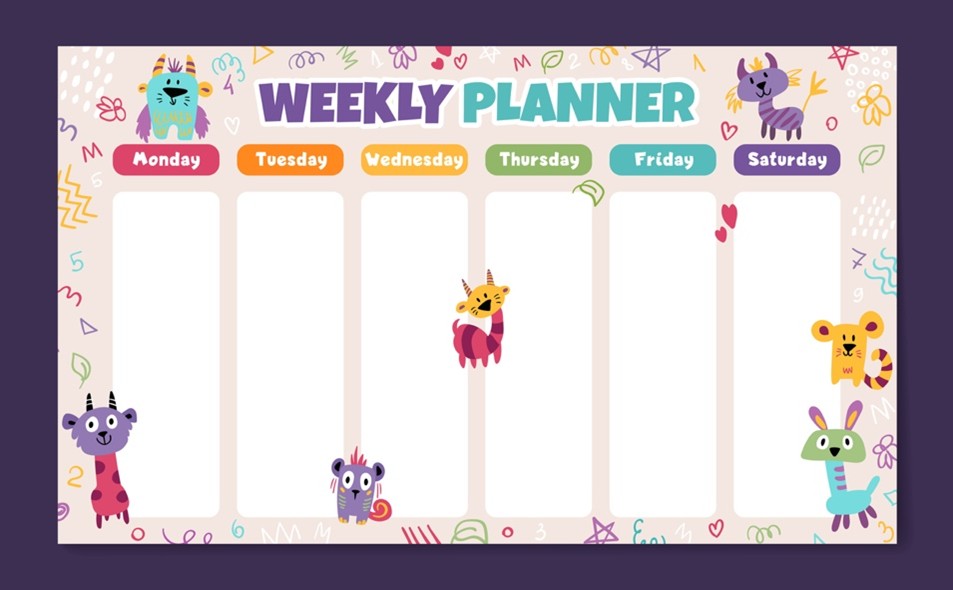
Let’s be honest—juggling increasingly complex academic and social calendars doesn’t come naturally to kids. But when we explicitly teach students how to organize their lives and “learn how to learn,” academic performance improves dramatically. The key is treating organizational skills with the same seriousness we bring to traditional academic subjects.
Renowned researcher Angela Duckworth advocates for direct instruction in skills like priority-setting and digital calendar management. For younger students, this might mean establishing predictable routines for entering the classroom, transitioning between activities, and packing up to leave. Visual aids displayed prominently can reinforce expected behaviors without constant verbal reminders. One fascinating study found that using a simple color wheel to signal different activity types—listening time, independent work, group collaboration, transitions—reduced the need for repeated teacher instructions by 75 percent. These approaches clear away the mental clutter that prevents kids from focusing on actual learning.
Older students need a different approach but the same intentionality. Make organizational tactics an integral part of your curriculum so students see that these skills are valued and rewarded. Some teachers model their own planning processes in front of students before asking teens to do the same. Teachers should consider maintaining a yearlong classroom calendar and having students periodically collaborate in small groups to map out study plans. When organizational skills are woven into the fabric of a course, students become more receptive and eager to develop them.
Scaffold for Learning Differences
Walk into any classroom and you’ll find students arriving with vastly different executive function capabilities. Students with dyslexia typically perform worse than their peers across all executive function dimensions, while those with autism and ADHD often struggle with attention, flexibility, working memory, and processing speed compared to classmates. Given that three-quarters of students with learning disabilities spend most of their day in mainstream classrooms, accommodations aren’t optional—they’re essential.
Students with learning disabilities frequently work harder than their peers and need more support to achieve the same outcomes. This reality calls for more explicit instructional approaches that, as it turns out, often benefit everyone. One special education teacher recommends narrating your thought processes when presenting lessons or discussing expectations. This “thinking aloud” makes the invisible visible.
For complex activities, break tasks into smaller steps and model each one explicitly. Instructional aids like graphic organizers and visual scaffolds help students organize and retain information more effectively. New AI tools like Diffit now allow educators to create leveled texts for struggling readers in seconds, making differentiation more manageable than ever before. The goal isn’t to lower expectations—it’s to provide the support that helps all students reach them.
Manage Cognitive Load
Human working memory has finite limits, typically holding about seven items for adults and four to six for young children. When introducing new material, consider how unfamiliarity and difficulty compound cognitive load. One study found that when students understood less than 59 percent of key terms in a lesson, comprehension suffered significantly. The solution? Simple vocabulary preparation before students tackle core content. Connect new material to prior knowledge, review foundational information regularly, and build in brain breaks—which recent research shows are more critical to learning than we previously realized.
During lectures or lessons, create opportunities for students to offload information before it overwhelms them. Provide handouts summarizing crucial details, or pause periodically for turn-and-talk sessions where students can consolidate their understanding. Think of working memory like a bucket—if you keep pouring without allowing time to empty it, everything spills over.
Executive function skills aren’t just about academic success—they’re life skills that shape how students navigate challenges, manage their time, and regulate their emotions. By thoughtfully designing our classrooms and instruction with these skills in mind, we’re not just teaching content; we’re building the cognitive infrastructure students need to thrive both in school and beyond.
 Leslie Stebbins is the Director of Research4Ed. She has more than twenty-five years of experience in higher education and K-12 learning. Her clients include Harvard University, the U.S. Department of Education, Tufts University, and the Gates Foundation. She has an M.Ed. from the Technology Innovation & Education Program at the Harvard Graduate School of Education and a Master’s in Library and Information Science from Simmons College. https://www.linkedin.com/in/lesliestebbins/