

Outdoor learning spaces are not just about getting some fresh air and vitamin D. They are about fostering creativity, critical thinking, and problem-solving skills in a whole new light. Through the use of flexible, multi-age outdoor learning spaces, students can collaborate on team building activities, sharpen their communication skills while building a makeshift shelter or conquer an obstacle course. The possibilities are as vast as the great outdoors itself!

The world of outdoor learning spaces can be a magnificent ride, where education meets Mother Nature in the most exciting and enlightening ways. Imagine this: a classroom under the open sky, where students’ imaginations run wild while they explore the wonders of the natural world. Treehouses that double as science labs and observation booths, where budding scientists can examine the intricate ecosystems right in their own schoolyard. A garden of colorful flowers and delicious vegetables can be the ultimate playground for hands-on learning.
Here is a little secret: outdoor learning spaces are not just for the students. They are for the teachers too. Imagine the joy of stepping out of the classroom and into a natural oasis where inspiration flows freely. It is time to find ways to create outdoor learning spaces that nurture not just minds, but spirits too. Together, we can cultivate a generation of nature-loving, knowledge-seeking, and earth-conscious individuals who are ready to make their mark on the world. Let’s embrace the power of outdoor learning spaces and watch education bloom and unfold like never before.
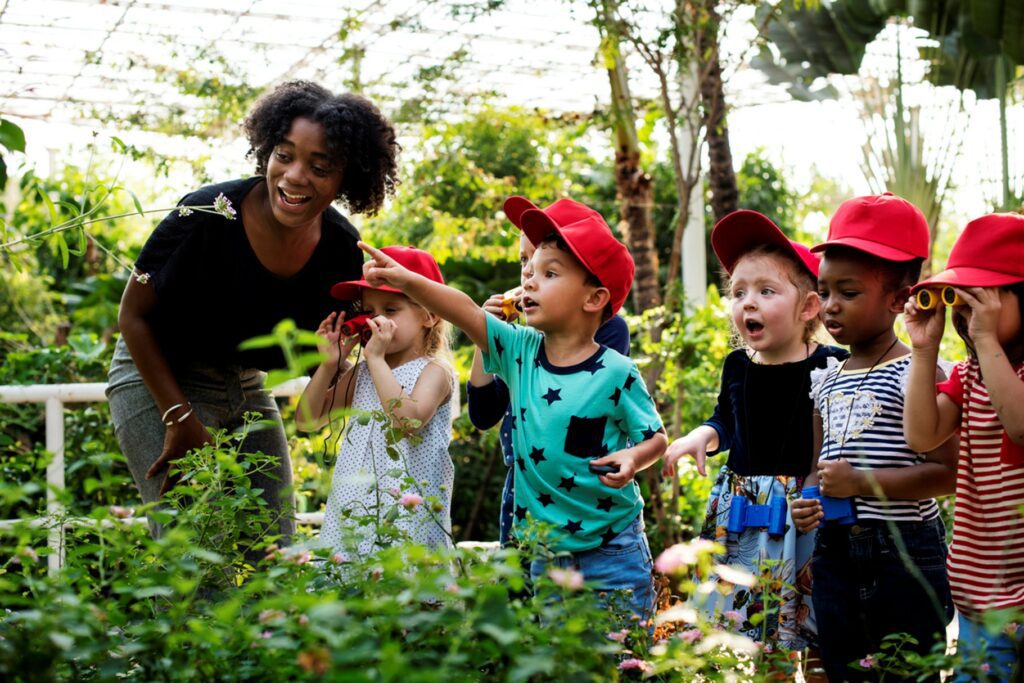
Important Considerations for Setting Up Outdoor Learning Environments
-
Make sure there is enough space for children to run around. For some schools it will be important to stagger times when different classes can access the space.
-
Provide shelter from sun, rain and snow. Covered spaces are important.
-
Make sure there is a nearby bathroom and drinking water for students to access.
-
Review the area for any unsafe conditions: Everything from wasp nests, to cracks in the sidewalk, to mulch spread too thinly need to be reviewed before students use the space.
Make the case to other stakeholders: Here are five reasons why outdoor learning spaces should be a primary leading educational initiative across the US.
-
Connecting with Nature
Urban, suburban, and rural schools can all benefit from outdoor learning spaces that connect students with nature. Research shows that exposure to nature has a positive impact on cognitive development, emotional well-being, and overall academic performance.1 By incorporating green spaces, natural elements, and wildlife habitats into school grounds, students have the opportunity to learn in an environment that promotes curiosity, creativity, and a deeper understanding of the world around them.
-
Physical and Mental Health Benefits
Outdoor learning spaces offer students the chance to engage in physical activities, promoting a healthier lifestyle. These spaces can be designed to include walking paths, sports fields, and playgrounds, encouraging students to be active during school hours. Additionally, spending time in natural environments has been linked to reduced stress levels, improved mental health, and increased attention spans.2 Providing students with access to outdoor spaces can contribute to their whole well-being and success in academics.
-
Experiential and Hands-on Learning
Outdoor learning spaces provide opportunities for experiential and hands-on learning, which can greatly enhance students’ understanding and retention of knowledge. Whether it’s conducting experiments in a garden, observing wildlife in their natural habitats, or exploring a historical site, these experiences foster curiosity, critical thinking, and a deeper connection to the subject matter. By integrating outdoor spaces into the curriculum, you can create meaningful learning experiences that go beyond traditional classroom settings.
-
Post-COVID Considerations
The COVID-19 pandemic has highlighted the importance of outdoor spaces in schools. Outdoor learning environments provide a safer alternative to traditional indoor classrooms, allowing for physical distancing and increased ventilation. As we navigate a post-pandemic world, incorporating outdoor learning spaces into school designs is a forward-thinking solution that can help mitigate future health risks and provide flexibility in accommodating changing circumstances.
-
Cutting-Edge Initiatives
Cutting-edge initiatives are revolutionizing outdoor learning spaces, making them more innovative and sustainable. For example, schools are incorporating renewable energy sources, such as solar panels, to power outdoor classrooms. Others are utilizing smart technologies to create interactive and immersive learning experiences. These initiatives not only enhance the educational environment but also inspire students to become eco-conscious and technologically fluent individuals.


Building outdoor learning spaces in urban, suburban, and rural schools is essential for providing students with natural influences that positively impact their overall well-being, academic performance, and connection to the world around them. In a post-COVID world, these spaces offer both safety and flexibility.
By embracing these new initiatives, educators and administrators can create innovative and sustainable outdoor learning environments that inspire and empower students. Let’s break free from the confines of traditional classrooms and embrace the boundless potential of outdoor learning spaces. Even on a small budget, we can find ways to create educational havens where students can explore, discover, and learn in environments that ignite their curiosity and passion. Let us work together to foster a love for nature, experiential learning, and holistic education for all students.
- Jimenez, Marcia P., Nicole V. DeVille, Elise G. Elliott, Jessica E. Schiff, Grete E. Wilt, Jaime E. Hart, and Peter James. 2021. “Associations between Nature Exposure and Health: A Review of the Evidence” International Journal of Environmental Research and Public Health18, no. 9: 4790. https://doi.org/10.3390/ijerph18094790
- Vella-Brodrick, D.A., Gilowska, K. Effects of Nature (Greenspace) on Cognitive Functioning in School Children and Adolescents: a Systematic Review. Educ Psychol Rev 34, 1217–1254 (2022).
